








Ask our optical dispensers

Ask Now

Parts of Glasses: All You Need to Know

By Melissa Nina Licari
Reviewed by Maria Horan FBDO

Maria Horan FBDO

Reviewed by

Maria Horan FBDO
Maria holds a BSc Honours in Ophthalmic Dispensing and has over 17 years of optical experience.
Get to know the different parts of your glasses, from frames to lenses, and learn how each component contributes to comfort, fit and visual clarity.
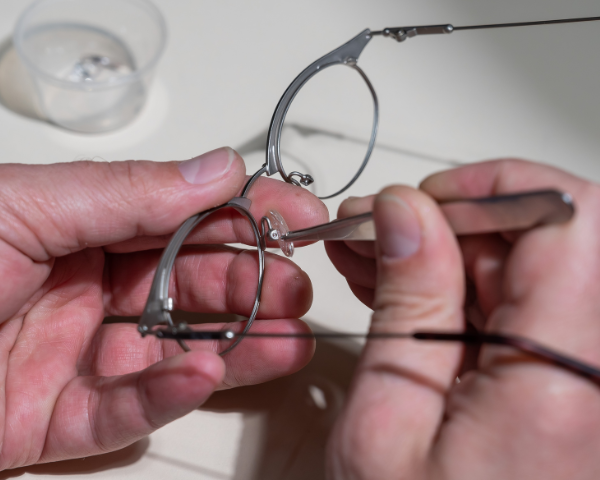
pairs of glasses disassembled

Ever struggled to describe which part of your glasses needs fixing? You’re not alone. Glasses may seem simple at a glance but each pair includes multiple components that work together to deliver comfort, vision correction and style.

Understanding the anatomy of your glasses can help you shop smarter, communicate better with optical dispensers and even troubleshoot minor issues on your own.

infographic of a pair of glasses with its different parts labeled

Main components of glasses

All glasses are made up of two core parts:

  • Frames: the structure that holds everything together
  • Lenses: the optical elements that correct your vision

Each of these components is made up of smaller, functional parts. Below, we break them down so you can understand what each part does and how it contributes to the fit and performance of your eyewear.

Glasses parts

Frame

The frame refers to the entire outer structure that supports the lenses. It’s what gives your glasses their overall shape and style. Eyeglasses frames can be made from various materials such as acetate, metal, plastic frames, wood or even sustainable blends.

Depending on the style, each frame includes specific subcomponents designed for stability, comfort and aesthetics.

The frame is considered the basic structure of your glasses. It includes multiple small pieces that serve both functional and aesthetic purposes.

Rim

The rim is the part of the frame that surrounds the lenses. There are three common rim types:

  • Full-rim: encircles the entire lens. Also known as full rim frames, these offer the most support and durability.
  • Semi-rimless: holds only the top of the lens, with the bottom exposed. Also referred to as half-rim frames.
  • Rimless: lenses are mounted directly to the bridge and temples without a surrounding frame. These are often called split frames because of how the lens is fixed between the two frame components.

Each rim type affects the look, weight and durability of the frame.

infograhpic of the different types of glasses rims

Bridge

The bridge connects the two lenses and rests on your nose. It supports most of the frame’s weight, making it a key factor in how your glasses fit. Bridge styles vary to suit different face shapes, including standard and low-bridge designs.

Some low-bridge frames are also referred to as Asian Fit, which may include other features like wider nose pads and adjusted temple angles for a more secure fit.

infographic of different bridge fits

In some frame styles, a bridge bump is added to improve grip and reduce slipping — this is especially helpful when you’re wearing glasses for long periods of time.

Top bar / brow bar

Not all frames have this feature but when present, the top bar (also known as a brow bar or sweat bar) sits above the bridge and connects the two lenses. Commonly seen in pilot frames, it adds both stability and a distinctive style element.

aviator glasses close up to emphasize brow bar

Nose pads

Nose pads help keep your glasses comfortably in place. There are two main types:

  • Built-in (sculpted): molded into the frame front, often seen in plastic or acetate frames
  • Adjustable: attached to the frame with small metal arms, usually found in metal frames
hands adjusting adjustable nose pads on eyeglasses

The right nose pads can improve comfort and prevent slipping, especially if you have a lower or higher nose bridge.

DID YOU KNOW?

Semi-rimless and rimless frames often rely on a nearly invisible nylon wire to help hold the lenses in place—a smart, lightweight design choice that also reduces visual bulk.

Pad arms

Pad arms are small metal supports that hold adjustable nose pads in place. They’re typically bendable, allowing optical dispensers to fine-tune the angle and position for a better fit on your nose. These small pieces can make a big difference in comfort.

End pieces

End pieces are located at the outer top corners of the frame front. They connect the front of the frame to the temples and can feature small design details or embellishments that add personality to the glasses.

Hinges

Hinges are the small joints that allow your temples (arms) to open and close. Most hinges are held in place with screws.

Some frames include spring hinges, which offer additional flexibility and improve durability, especially for wider faces or more active wear.

Screws

Screws secure the hinges to the end pieces and temples. They’re one of the most replaceable parts of a glasses frame and are included in most at-home repair kits.

A loose hinge screw is a common issue and usually a quick fix. These small metal screws are essential to your glasses’ functionality and should be checked regularly for tightness.

Temples

Temples are the long arms that extend from the frame front and rest over your ears. Their main job is to keep your glasses in place. Also known as glasses arms, they come in a few common styles:

  • Straight (paddle): no bend, lays flat against the head
  • Cable (curl): wraps behind the ear for a secure fit; often found in metal frames
  • Drop (hockey end): gently curved down to sit behind the ears — the most widely used style today
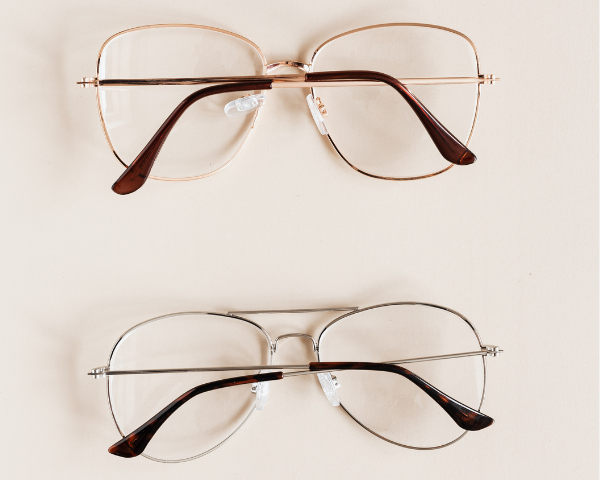
two pairs of glasses vertically in a row

Temple tips

Temple tips are the ends of the temples that rest behind your ears. They’re usually made from a softer or coated material to reduce pressure and prevent skin irritation.

Lens details

Lenses are the most important component of prescription eyeglasses.

They’re prescribed by your optometrist and tailored to conditions like myopia (nearsightedness), hyperopia (farsightedness), astigmatism and presbyopia (age-related near-vision loss).

Lenses can also include performance-enhancing features such as:

  • Anti-glare and anti-scratch coatings
  • Blue light filtering, such as our exclusive zFORT® lenses
  • Photochromic lenses that adapt to light (also known as Transitions®)
  • Polarized coatings to reduce glare outdoors
  • Tints or mirrored finishes for sunglasses
glasses lenses

Your eye care provider can recommend the right combination of lens material and coatings based on your prescription, lifestyle and frame choice.

If you’re new to prescription lenses, understanding your options can make a crucial difference in day-to-day comfort.

The importance of understanding your glasses

Knowing the parts of your glasses helps you make more informed decisions, whether you’re adjusting the fit, replacing a component or choosing a new frame. It also makes conversations with optical dispensers clearer and more productive.

Each element plays a role in how your glasses function, feel and support your vision. If you’re unsure what suits your needs, our certified optical dispensers are here to help.

You can also visit our Optical Centre for more expert advice on frames, lenses and eye health.

Take care of your glasses and they’ll continue to take care of your eyes.

Related articles

What Are Blue Light Glasses?
Discover how blue light affects our eyes and dive into how blue light glasses work.
View more
Myopia
Myopia, or nearsightedness, is the most common form of vision impairment in the world. Learn about its effects, causes, and...
View more

Related articles

What Are Blue Light Glasses?
Discover how blue light affects our eyes and dive into how blue light glasses work.
View more
Myopia
Myopia, or nearsightedness, is the most common form of vision impairment in the world. Learn about its effects, causes, and...
View more

Leave a comment

Your email address will not be published. Required fields are marked *