Enjoy great value with our frame and lens deal: 1.5 index coated lenses are included with most styles, and multifocal or occupational lenses can be added at an additional cost based on your prescription.
Best Price Guarantee
If you find a lower price online within 14 days of purchase, we will BEAT IT by AUD2!!
We have qualified optical dispensers available to answer your questions and help you choose lenses and frames. Click here to get in touch with one of our optical dispensers.
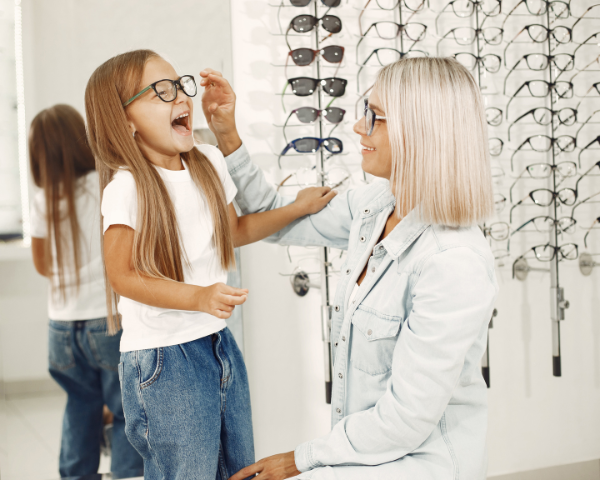
Shopping for kids’ glasses online? Here’s the key information you need to make the best, safest choice for your child.
Overview
When buying kids’ glasses, you’ll need an up-to-date prescription with the PD (pupillary distance), a well-fitting frame, safe and lightweight lens materials, and durable features like spring hinges.
It’s also important to check warranties and consider having a back-up pair in case of accidents.
How should glasses fit on a child?
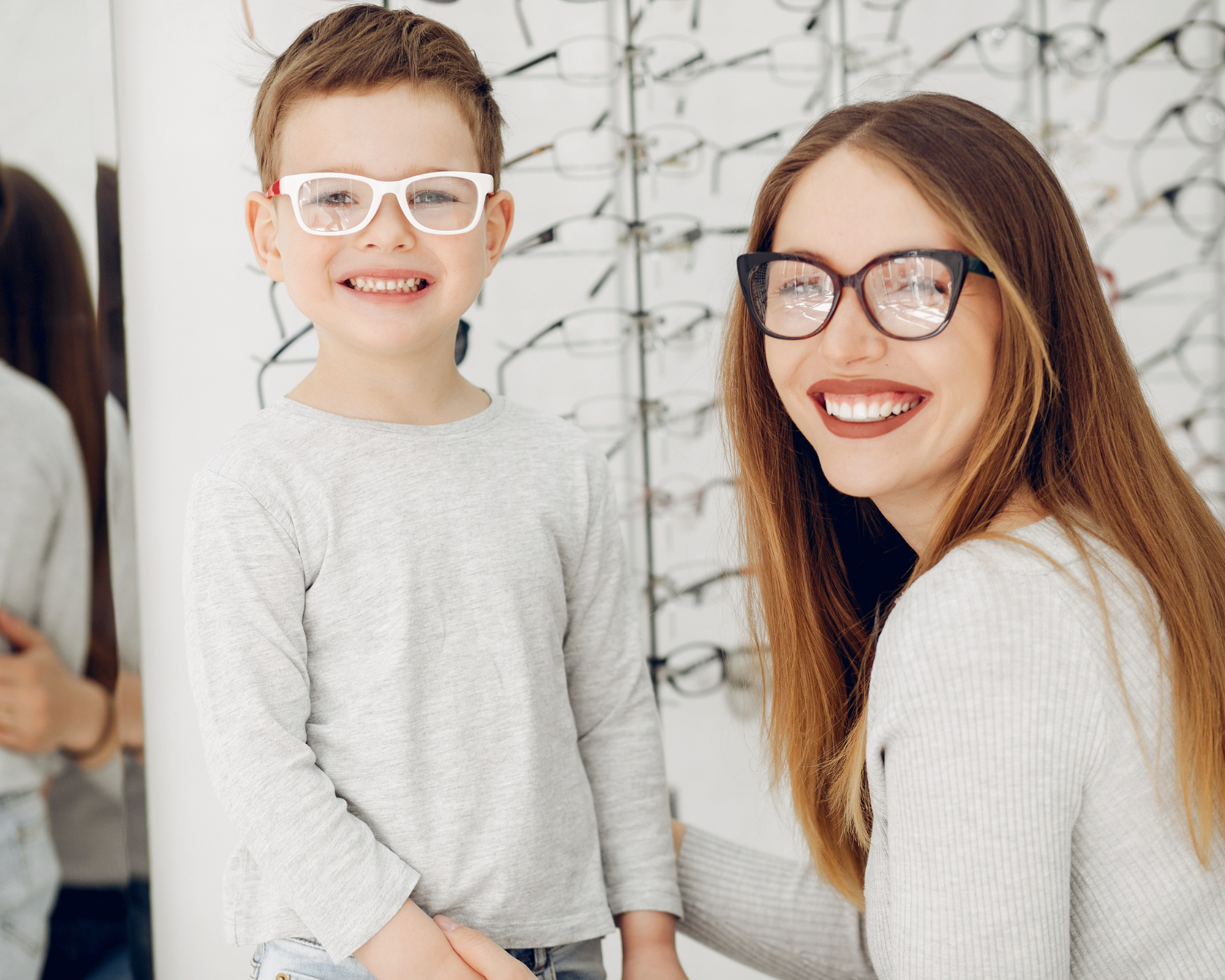
A child’s glasses should fit comfortably within the eye socket, not too low on the cheeks or sliding down the nose. Frames that sit too low put excess pressure on the nose and cause discomfort.
Because children grow quickly, glasses may slide down their noses. Here are some tips to help their glasses stay in place:
Choose metal frames with adjustable nose pads.
Opt for plastic frames with a molded bridge.
Consider cable temples, which hook behind the ears to keep glasses in place.
Plastic frames have traditionally been preferred for durability and price, but modern metal children’s frames are now equally strong and offer better adjustability.
Lens thickness and materials
Lens thickness depends on your child’s prescription strength. Higher prescriptions can mean thicker lenses, but newer lens technology helps reduce weight and bulk without compromising clarity.
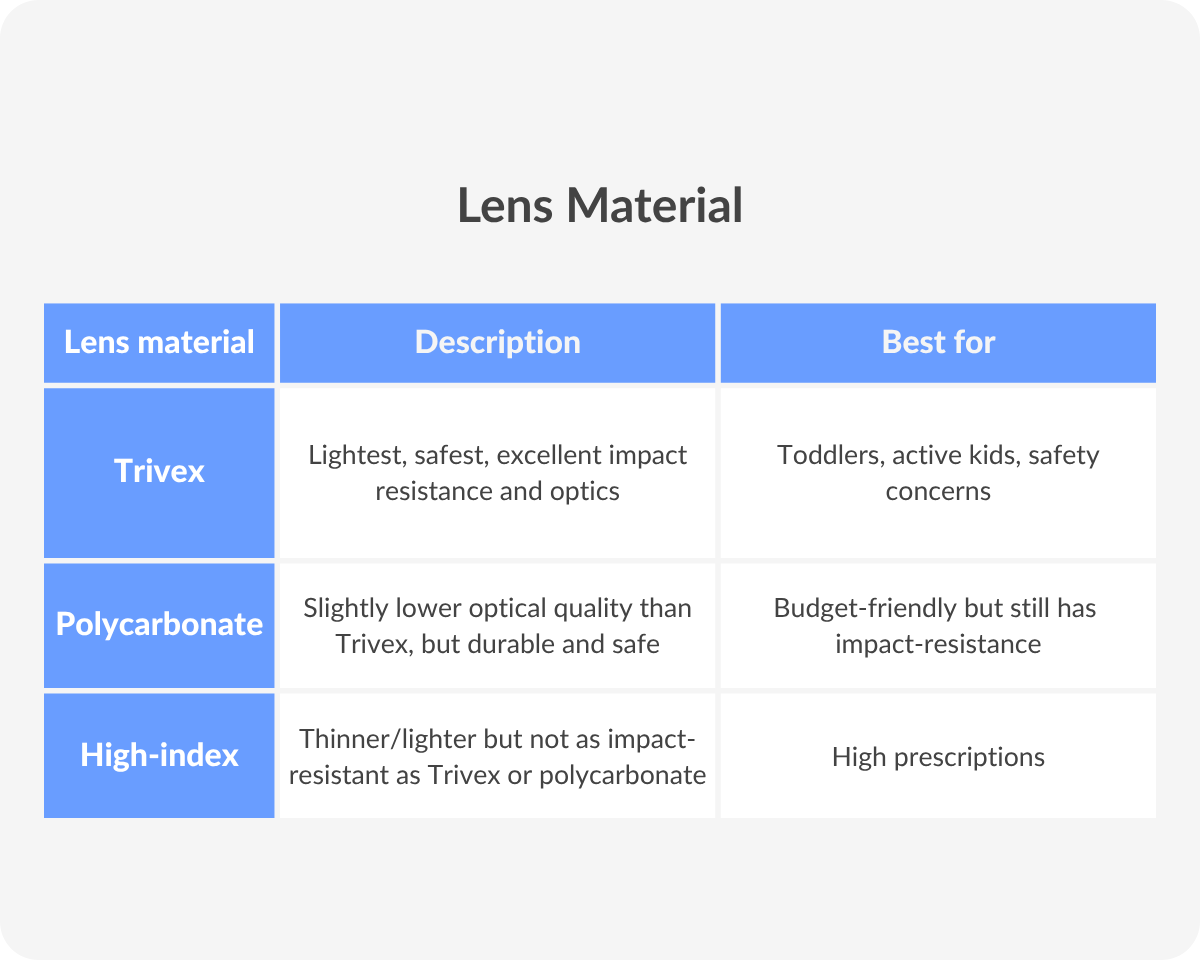
Best materials for kids
Polycarbonate – Lightweight, impact-resistant, and safer than glass
Trivex – Similar to polycarbonate but offers even better clarity and durability
Avoid traditional glass lenses for children, they’re heavier and can shatter. When buying online, always confirm the lens material in the product details or check with an optical dispenser.
EXPERT'S TIP!
“For kids with sensitive noses or glasses that constantly slip, choose frames with adjustable nose pads and cable temples. They provide a custom fit that adapts to growth and drastically improves day-to-day comfort.”
Neggie Saadatpay-Wright, Dispensing Optician
Pupillary distance (PD): Why it’s essential
Pupillary Distance is the distance between the centers of your child’s pupils. It directly affects how lenses sit in the frame, and therefore how well your child sees.
Incorrect PD can lead to:
Headaches
Blurred vision
Dizziness
Your optical dispenser typically includes PD on the prescription. If it’s not listed, you can request it from your optical dispenser or use our quick and easy PD tool to measure it at home.
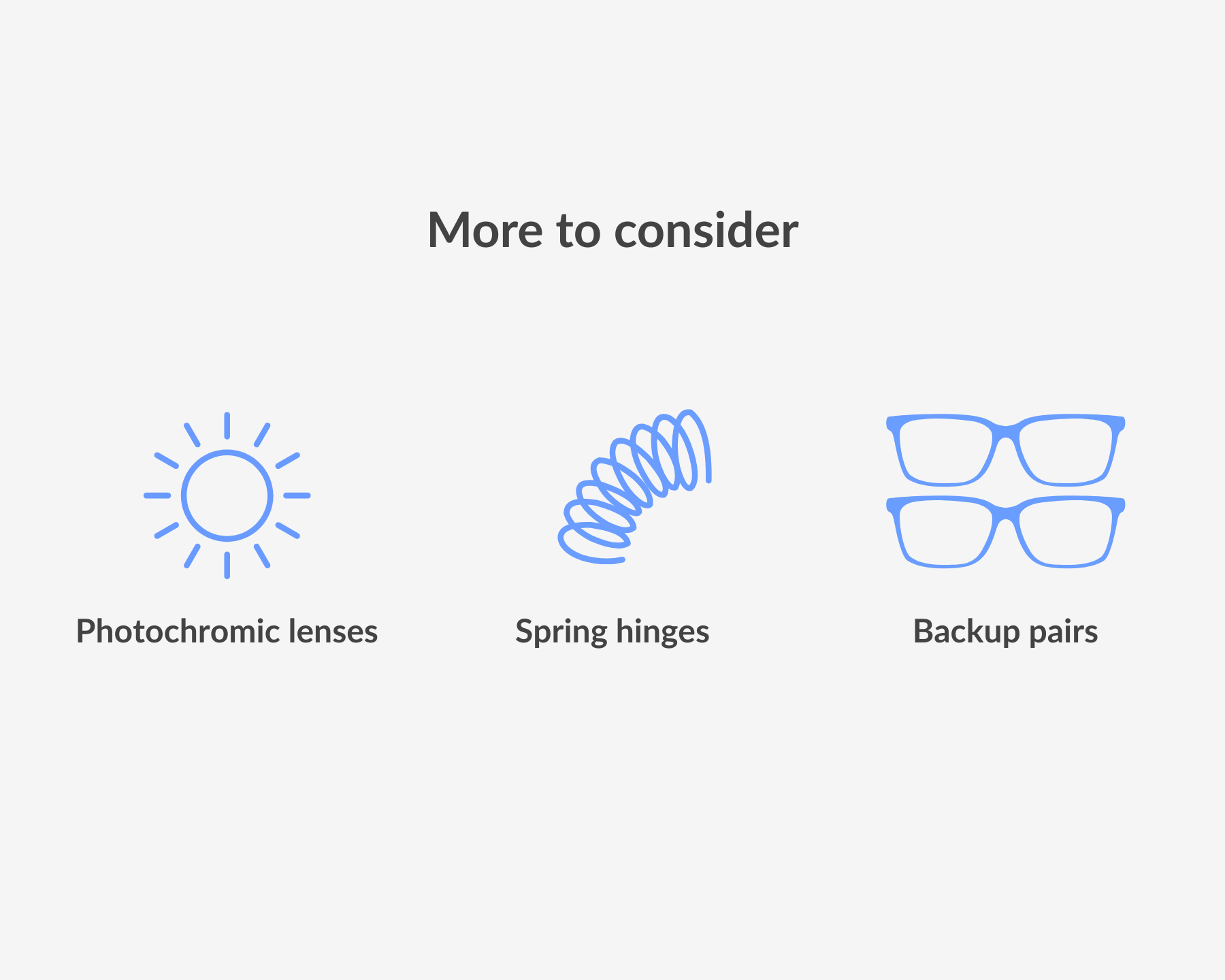
More to consider
Photochromic lenses for school
Photochromic lenses automatically darken in bright sunlight and stay clear indoors, giving kids versatile protection from:
Harsh sunlight
UV exposure
Glare during outdoor play
These lenses are perfect for the school day. Photochromic lenses means your kid only needs one pair of glasses at school. They are comfortable in class and ready for recess outside, no need to switch to sunglasses!
Spring hinges for active kids
Spring hinges allow the temples to flex outward, making the glasses more resistant to:
Bending
Snapping
General rough handling
They’re especially helpful to younger kids or those with active lifestyles.
Back-up pairs
Kids break or lose glasses a lot more often than adults. Having a backup pair ensures they’re never without clear vision, especially at school.
Affordable eyewear collections like the SmartBuy Collection make it easy to have an extra pair on hand without breaking the bank.
Creating excitement around wearing glasses
Trying frames in their favorite colour
Kids are far more excited to wear glasses when they get to choose a frame in their favourite colour, turning it into something fun and uniquely theirs.
Virtual try on
Letting them use a virtual try-on tool makes the process feel like a game, helping them see how cool they look in different styles before you buy.
Favourite book or movie characters wearing glasses
Showing them characters they already love who wear glasses helps them feel proud and confident about wearing their own.
Conclusion
Buying kids’ glasses online might feel uncertain at first, especially when you can’t test the fit or feel the materials. With the right checklist, you can make a confident, informed choice that’s just as reliable as buying in-store.
Still unsure? Speak to one of our certified dispensing opticians for personalised advice.
Related articles
The Best Glasses for Kids
Stylish, practical and fun, today’s best kids' glasses make it easy to find eyewear that children love to wear.