







Night Blindness: Causes, Symptoms, and Treatment
Reviewed by
Maria Horan FBDO
Night blindness, or nyctalopia, is a reduced ability to see in low‑light conditions. It’s not a disease but a symptom of something affecting how your eyes adapt to darkness.
Eye conditions, lifestyle factors and systemic health issues can all cause night blindness or make it worse over time.
Those affected may notice it when driving at night, walking through dim spaces or moving from a brightly lit environment into a dark room. These changes in lighting can make it hard to process how much light is needed for your eyes to focus.
As a result, vision becomes darker, more blurred and murkier than it should. Some people also report difficulty seeing fine details in the dark or distinguishing objects clearly due to low‑light inability.
Night blindness is often linked to eye diseases or overall health issues that affect the retina and its ability to process electrical signals from light.
For some, the first symptoms may be subtle while others notice a clear shift in their ability to function in dark settings. Read on to learn more about the symptoms, causes, diagnosis, treatment options and ways to support your night vision.
Common symptoms of night blindness
Night blindness often shows up as trouble seeing in dim light, especially when driving at night or adjusting to darker settings.
Other symptoms can include:
- Needing extra time to adjust between bright and dark environments
- Seeing glare or halos around lights
- Blurry or strained vision in the dark
- Increased light sensitivity
You may also experience poor night vision even if your daytime vision seems normal. In some cases, symptoms like cloudy vision or loss of colour vision can appear.
These issues may develop gradually or suddenly. If they persist, it’s best to speak with a dispensing optician. For some individuals, dry eyes can also contribute to night-time visual discomfort or difficulty adjusting in the dark.
Causes of night blindness
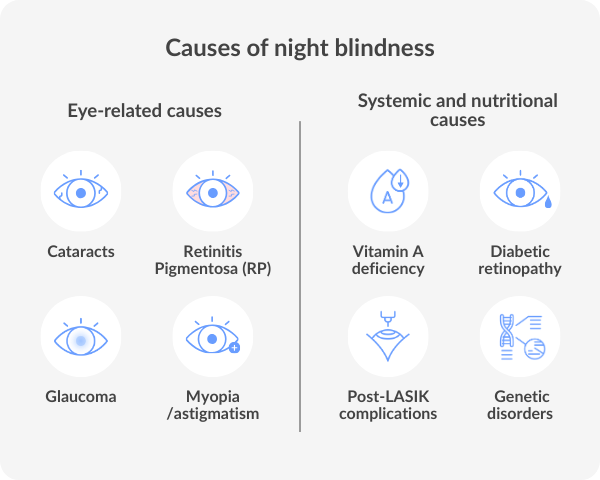
Night blindness can result from a variety of issues, often grouped into two categories: conditions that directly affect the eyes and broader health or nutritional causes.
Eye-related causes
Many cases begin in the eye itself, especially in the retina. Cataracts can cloud the eye’s lens and scatter too much light, making it harder to see in dim or dark settings even when there is enough light in the environment.
Glaucoma may affect peripheral vision and night sight by damaging the optic nerve. Inherited conditions like retinitis pigmentosa gradually break down the retina’s light‑sensitive cells, leading to reduced night vision and sometimes tunnel vision.
Even uncorrected vision problems, like myopia or astigmatism, can cause vision impairment and make it harder to see clearly in low light conditions.
In some cases, problems with pupil size can limit how much light enters the eye, further reducing vision in dim environments.
People who have undergone refractive surgery, such as LASIK, may temporarily notice halos or reduced night vision as their eyes heal. These effects typically improve over time, but it’s important to monitor any changes.
Systemic and nutritional causes
Vitamin A deficiency is a well-known cause of night blindness. This nutrient supports healthy retinal function, and even a mild deficiency can impair vision in the dark.
Other causes include diabetic retinopathy, where high blood sugar damages blood vessels in the retina. Some people experience temporary changes in night vision after refractive surgery procedures like LASIK.
A rare condition called congenital stationary night blindness can limit night vision from birth and may also affect colour vision or light sensitivity.
Some systemic illnesses may also affect night vision. For instance, chronic pancreatitis can lead to nutritional deficiencies, including vitamin A deficiency, which plays a role in night vision.
DID YOU KNOW?
Vitamin A deficiency is the leading cause of preventable childhood blindness worldwide. While rare in wealthier countries, even mild deficiencies can impair low-light vision and contribute to poor night vision.
When should I check with a doctor?
If you’re finding it hard to see in dim or dark settings, or to adjust between a bright light and a dark room, it’s worth getting your eyes checked. Night blindness can be a first sign of an underlying condition that may need treatment.
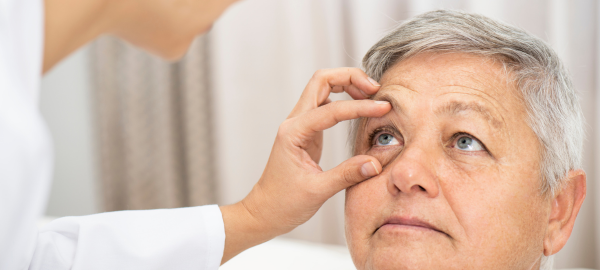
Diagnosis usually begins with a comprehensive eye exam. Your optometrist or eye doctor will test your vision, check how your eyes respond to light changes and examine the retina and optic nerve.
Further testing may include retinal imaging, visual field testing or electroretinography (ERG), which measures how the retina processes electrical signals from light. If a vitamin A deficiency is suspected, a blood test may be recommended.
Understanding what’s behind your vision impairment is the first step toward finding the right treatment.
Treatment options
Treating night blindness starts with identifying the cause. In many cases, managing the underlying issue can help improve vision in low light conditions.
If cataracts are to blame, surgery to replace the cloudy lens can restore clarity. Glaucoma is managed with medication or surgery to protect the optic nerve. For myopia or astigmatism, updating your corrective lenses can improve night vision.
LASIK-related changes often improve with time, though night-driving glasses may help in the short term. You can also wear lenses that help reduce glare at night, especially while driving.
Vitamin A deficiency is usually treated with diet changes or supplements, under medical guidance. If diabetic retinopathy is involved, managing blood sugar and addressing retinal damage is key.
There’s no cure yet for inherited conditions like retinitis pigmentosa, but ongoing research and low-vision support can help. These conditions may also affect colour vision or contribute to tunnel vision in some cases.
Prevention and outlook
Not all causes of night blindness can be prevented, but there are steps you can take to reduce your risk and support long-term eye health.
A diet with vitamin A-rich foods such as carrots, spinach and eggs supports retinal health. Regular eye exams are important, especially if you have diabetes or a family history of eye diseases.
Wearing sunglasses with UV protection can help preserve your vision by limiting exposure to too much light. If you notice any changes in your ability to see in low light conditions, early diagnosis gives you the best chance of effective treatment.
Some causes, like cataracts or vitamin A deficiency, are treatable. Others may require long-term care, but early support can help manage symptoms and prevent further vision impairment.
Addressing even small changes in your ability to see fine details or adjust in dim settings can help catch early warning signs.
How we can help
Struggling to see clearly in low light can be frustrating, especially when it starts to affect your daily routine. The good news is that night vision problems are often manageable with the right support.
You don’t have to figure it out on your own. Our certified optical experts are here to answer your questions and help you understand what might be causing changes in your vision. We’ll guide you through your options and help you take the next step.
If you’ve noticed signs of night blindness or other symptoms like trouble seeing at night, now is a good time to take action. We’re here to help you feel more confident and see more clearly.
Related articles


Related articles